

The gong sounded at 4 a.m.
I dressed quickly in loose, comfortable clothes, brushed my teeth, then left the sparse dormitory where I’d slept. The night sky was still full of stars as I walked across the courtyard to the meditation hall. I slipped my shoes off, leaving them just outside the door, and found the cushion I’d set up the afternoon before. I was one of the first to arrive. The hall, where I would spend much of the next ten days sitting cross-legged, eyes closed, in total silence, was nearly dark.
As I settled in, a rather large spider scurried across the aisle and disappeared into a row of unoccupied cushions. I thought about going back to my room for the glass jar and the piece of paper we’d each been given, along with the instructions that we were not to kill any bugs. If we found one, we were to trap it under the jar, slide the paper underneath, and release it outside. But I realized I’d never find him among the cushions, so I didn’t go back for the jar.
The previous December, at the company holiday party, a colleague I admire, who attended Vipassana retreats regularly, had suggested I try one. She and her husband fund an orphanage in Vietnam and spend a month there every year helping the children. I wanted to be a little more like her.
I’d been reading about the benefits of mindfulness and meditation in books like Mindsight by Daniel Siegel. I’d even occasionally listened to guided meditations on YouTube, but that was the extent of my experience.
Without looking into what a ten-day silent retreat involved, I found the website for Vipassana meditation as taught by S. N. Goenka. There was a center about three hours northeast of Austin, and I signed up.
I hoped the retreat would help me. My mother had died the previous July, on her eighty-third birthday. My oldest son, Michael, had been struggling with addiction to heroin and fentanyl. He entered a ninety-day inpatient program the day after my mother died. He missed her memorial service.
When I signed up for the retreat, Michael had completed the ninety-day rehab and was staying in a sober living home in Kerrville, Texas. He’d been doing well for several months, and I was sure the worst of his struggles were behind us.
In early February, when Michael told me he was ready to move back to Austin, I was supportive. He’d been working a minimum-wage job in Kerrville and was bored. He said he had a job lined up installing solar panels, work he’d done before, and that he would live at home for a while.
He even planned to start a Narcotics Anonymous group in our area, telling me there was a big need for one. Instead, a friend picked him up from the sober living home, and he didn’t move back in with us.
He’d been getting a Vivitrol shot for almost two years, through rehab and all the months in Kerrville. Vivitrol blocks the effects of heroin and other opioids. It’s meant to help prevent relapse.
While Michael was in sober living, James, my husband, took him for the shot every single month. He drove to Kerrville, brought Michael back to Austin for the injection, and drove him back. And every single month he fought with the insurance company so Michael wouldn’t miss a dose.
We had dinner with Michael on his twenty-fifth birthday, February 8, 2018, a couple of days after he’d left Kerrville. He still seemed okay then, but shortly afterward, he missed his Vivitrol injection and refused to go back on it, saying, “I’m going to have to wean myself off of it at some point. It might as well be now.”
A couple of weeks after moving out of the sober living home was not the time to stop. But he was an adult, and there was nothing James or I could do to force him to continue.
I didn’t have much insight into what he was doing after he moved back to Austin, but I did know that he wasn’t installing solar panels, and from what I could tell, he wasn’t working.
Michael came with us on our annual family ski trip to Colorado in mid-March. He wasn’t himself. Something in him had hardened. He left the trip early. We didn’t see him again until Easter Sunday. I had hoped his time in inpatient treatment and sober living would help him heal, but he still didn’t seem well to me.
He was still on probation for something that had happened much earlier. In late April, he failed a drug test at his probation meeting. The judge gave him an ultimatum: go back to rehab or go to jail.
I’m not sure why, since he wasn’t working, but the judge gave Michael two weeks to get his affairs in order. I thought about canceling the retreat, but kept hoping we’d get him into another program, so I put off the decision. A couple of days after the judge’s order, Michael checked himself back into the same rehab he’d been in the previous summer. Two days later, he walked out.
Mother’s Day, May 13, was the deadline the judge had given Michael to return to rehab. James and I were supposed to pick him up at noon that day to take him, but we couldn’t find him and he wasn’t answering his phone.
That afternoon, afraid for my son’s life, I made a promise to a God I didn’t believe in. If he spared my son, I would help other mothers. I believed prayer worked, but only by tapping into my own subconscious, not because anyone out there was listening.
Shortly after the prayer, Michael called. James and I drove him to a rehab facility two hours northeast of Houston and got him checked in after midnight. We got home around 6 a.m., just in time to get ready for work.
Two days later, on May 16, I was on my way to Dhamma Sirī, the meditation center near Kaufman, Texas. With Michael in residential treatment, I could spend the ten days focusing on myself.
Back in the meditation hall that first morning, I sat on my cushion as the room began to fill, women on one side, men on the other, separated by a wide aisle. My heart was heavy. I was lonely and exhausted, and already second-guessing my decision to come.
Michael’s addiction had worn me down. My marriage had been strained for years, and I had learned not to turn to James when I needed comforting. My mother had always been the person I called when I needed someone to listen, and now she was gone. I missed her terribly.
At 4:30 a.m., Goenka’s recorded voice came over the loudspeaker in the hall, low and unhurried, almost a chant, with a distinct Indian accent.
“My dear ones,” he told us. “Today you will learn how to live.”
Then he began explaining how to observe the breath.
“Anapana means the breath coming in, the breath going out.”
I closed my eyes and listened.
“Don’t try to control the breath. Just the breath as it is.”
When the recording ended, I tried to pay attention to my breath as it came in and went out, but my mind kept wandering back to the spider, and then Michael, and then my mother.
Breathe in. Breathe out.
Before long, one of my legs went numb. Trying to be as discreet as possible, I shifted positions, only to have the other leg go numb shortly afterward. Already that first morning I was thinking that if I’d known what I was in for, I probably would not have signed up.
But I was there, and I felt a solidarity with Michael in his inpatient program, as if we were in it together. Those two hours before breakfast were some of the longest of my life.
There was a separate dining hall for women. At breakfast, we sat facing a wall. No talking, no eye contact. They called it noble silence. The food was vegetarian, lightly spiced, and better than I expected.
Breakfast and lunch became what I looked forward to every day. We were allowed to return to our dormitory for a short break before resuming, but with strict instructions: No reading, no writing. No phone, email, or internet.
Then we returned to our cushions for three more hours of meditation, followed by lunch. Each afternoon after lunch, we met individually with a female teacher. We were allowed to speak with her and ask questions about the practice.
That first evening, as we would every night, we sat in the meditation hall and watched a recording of Goenka’s discourse for the day on the big-screen monitors at the front of the room. He had a round belly, grey hair, and a kind face. He talked about how difficult the first day could be because we weren’t used to sitting for hours and because our minds kept wandering. He was describing my morning.
He also spoke about how we took our unhappiness out on other people. There could be no peace between countries, he said, or within families, until we each achieved peace within. He called the practice “the art of living.”
The next morning, the gong sounded before dawn, and we began again.
For the first three days, we practiced Anapana, focusing on our breath.
Sometime around the second or third afternoon, I began experiencing intense pain in my neck and upper back. I had already been dealing with my legs falling asleep, but this was different. I wasn’t sure if I was going to make it.
In my one-on-one afternoon session, I told the teacher about the pain, hoping she would give me some tip or technique to make it stop.
Instead she told me, “This is pain you are already carrying coming to the surface.”
Her answer disappointed me. I had wanted a fix. I went back and sat with the pain.
On the fourth afternoon, after lunch, we began Vipassana. From the loudspeaker, Goenka instructed us to survey our body, “from the top of the head to the tips of the toes, with a calm and quiet mind, alert and attentive, patient and persistent.”
Once we finished, we were to start over, observing whatever we felt along the way, without reacting. I didn’t realize it then, but I was learning to listen to the pain instead of trying to numb it.
What was it trying to tell me?
After days of meditating, I was open to new ideas. One lesson stayed with me. When we feel anger and hatred, we are the first ones to suffer.
I knew what it was like to live with anger and resentment. I’d carried a lot of both in my marriage. I think this was the first time I understood how much my own anger and anxiety had been hurting me.
As the course went on, I began thinking about what these teachings might mean for Michael. I believed heroin was how he numbed his pain. He had spent months without using drugs, but I hadn’t felt that he had gotten well. I couldn’t imagine him sitting through a ten-day silent retreat. Still, I wondered whether some of what I was learning could be part of a treatment program that would help him with whatever was hurting underneath his addiction.
On day seven or eight, I was moved out of the main hall into a small, private, soundproof room in another building. The private rooms were for students who were doing well.
Instead of sitting up straight, cross-legged, I could lie down, and the pain went away. During one of those sessions, I found myself somewhere between sleeping and waking. It was as if I were pure consciousness, with no body at all.
On the morning of the tenth day, over the loudspeaker, Goenka taught us mettā, the meditation of loving-kindness. He described it as generating vibrations of goodwill and sending them out to all beings, near and far. The calmer the mind, he said, the stronger the vibrations.
By then I felt lighter than when I had arrived. I breathed into my heart space, and my heart felt open. I sent my loving-kindness to my father, who was still grieving my mother’s death. Then I sent it to James at home in Austin and to Michael in rehab in East Texas, both two hundred miles away in different directions.
When the mettā sitting ended, so did the noble silence. Some of us gathered in the courtyard. The whole place came alive. Everyone was animated, almost exaggerated. I can’t remember a single conversation, only that we were all talking.
* * *
Usually, I would have found the long drive home down I-35 boring, but this time I turned the music up and enjoyed the day. As I was driving through Waco, I heard what I thought was the sound of a helicopter over the blasting beat from the car stereo. It sounded like it was right above me, but the whole car was shaking. And then I realized there was no helicopter. Something was wrong with the car.
I pulled over to the shoulder and got out to inspect. Sure enough, the rear passenger tire was completely shredded. The tire had blown as I was driving seventy-five miles an hour in heavy traffic. And my car didn’t have a spare, so I had to call a tow truck to haul me and the car to a tire store. It was Sunday, but fortunately, I found one that was open.
Any other time, a blown tire on the highway would have had me in a frenzy. This time, I rode up front in the tow truck’s cab and enjoyed listening to the driver talk about his life. For the length of that ride, we were friends.
Two days after I returned from the retreat, on May 29, Michael Pollan was in Austin to speak about his new book, How to Change Your Mind: What the New Science of Psychedelics Teaches Us About Consciousness, Dying, Addiction, Depression, and Transcendence. The word “addiction” in the subtitle had caught my attention. I’d downloaded the Kindle edition and read the book, hoping to find information that might help Michael.
I was particularly interested in iboga, a sacred plant medicine from West Central Africa that has been used to interrupt opioid addiction, and in ibogaine, which is extracted from it and given in clinics. I’d been researching both as possible treatments for him. I had recently spoken by phone with Anthony Esposito, a cofounder of Awaken Your Soul, an iboga retreat center in Costa Rica.
I invited James to come with me. He declined, saying he didn’t want to be around a bunch of “weirdos,” but agreed to drive me downtown so we could have dinner afterward.
I hoped he might change his mind when we got there and come inside. I wanted him to hear that there were still things we could try for Michael. And maybe he’d see some possibility of healing for himself, for the pain he’d carried since childhood.
Traffic was heavy, and there was construction downtown. The directions on Google Maps weren’t helping. James was already irritable, and after a couple of wrong turns, his mood got worse. I wished I had driven myself.
I thought about what Goenka had said about anger, how we hurt ourselves first and then the people around us. I wanted to share something of what I’d learned during the retreat. But I knew saying anything would only make James angrier, so I stayed quiet.
When we reached Central Presbyterian Church, he dropped me off. I was relieved to get out of the car.
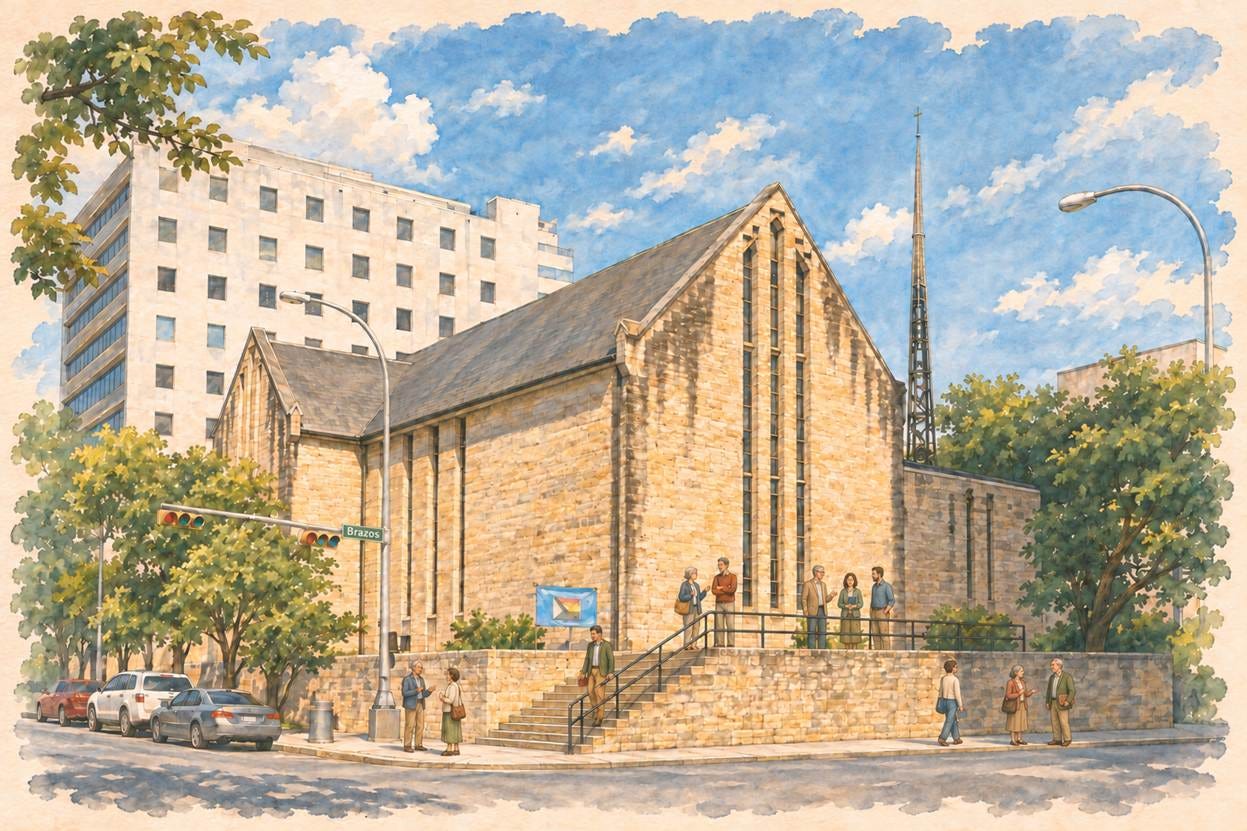
Inside, the audience was standing room only. I listened to Pollan’s presentation, then joined the long line to have him sign the hardcover copy of the book that came with admission.
When it was my turn, I tried to explain as briefly as possible. My son was struggling with heroin addiction, and he kept relapsing after treatment. I wanted to learn more about iboga and ibogaine. Had Pollan come across any useful resources during his research for the book?
He didn’t have any suggestions, but did invite me to email him and let him know how my son was doing. I said I would, though I never followed up.
After he signed my book, I left the church and started down the steps to find James, who was waiting for me in the car. Someone tapped me on the shoulder.
He introduced himself as David. He’d been standing behind me in the signing line and had overheard what I’d said about my son.
David told me his twenty-year-old daughter was struggling with opioid addiction. She was in her second residential treatment program, out of state, and like me with Michael, he was worried that it wouldn’t be enough. He had come looking for information about other treatments, too.
I knew that fear. Although Michael was back in rehab, after what had happened when he left Kerrville, I couldn’t assume that being in treatment meant he would get well.
James saw us talking from the car. He got out and came up the steps to join us.
I told David about Awaken Your Soul and my conversation with Anthony. I hadn’t been there myself yet, but I could share what I’d found. On Mother’s Day, I had promised to help other mothers. The first person to ask was a father. Before we parted, we exchanged contact information so I could send him the website.
On the drive home, James told me that after I went into the church without him, he had watched the people walking in. They looked “normal,” he said. He wished he had joined me.
That night, I texted David the link. James emailed Anthony to confirm our dinner with him and his wife, Amber, for the following week, and included David in the invitation.
David wrote back the next morning. He would be out of town at a family reunion, but he’d get in touch with Anthony later. After that, I never heard from him again and have no idea what happened to his daughter.